

 of small-scale,
 History of RENOVA’s Solar PV Power Generation Business
Operating 13 large-scale solar PV power plants in Japan
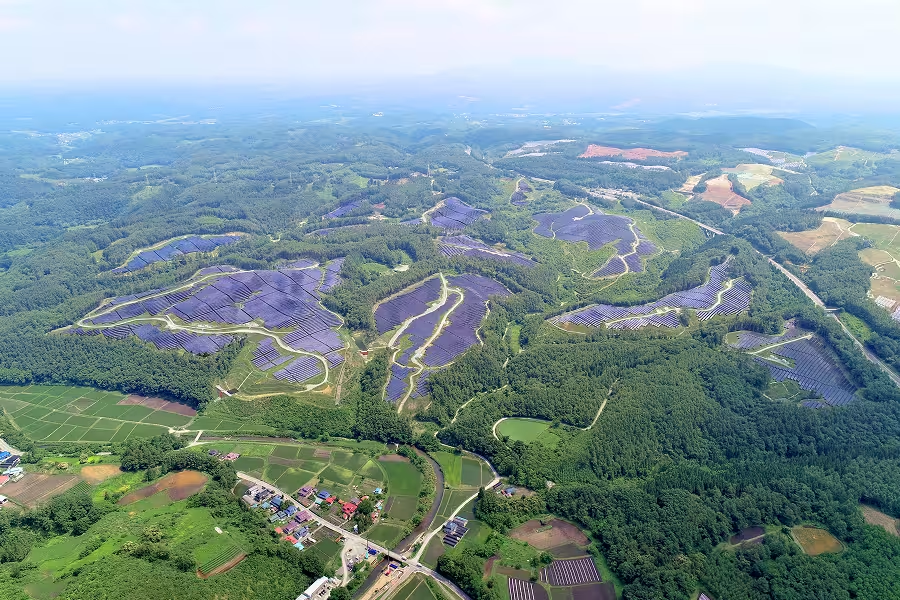
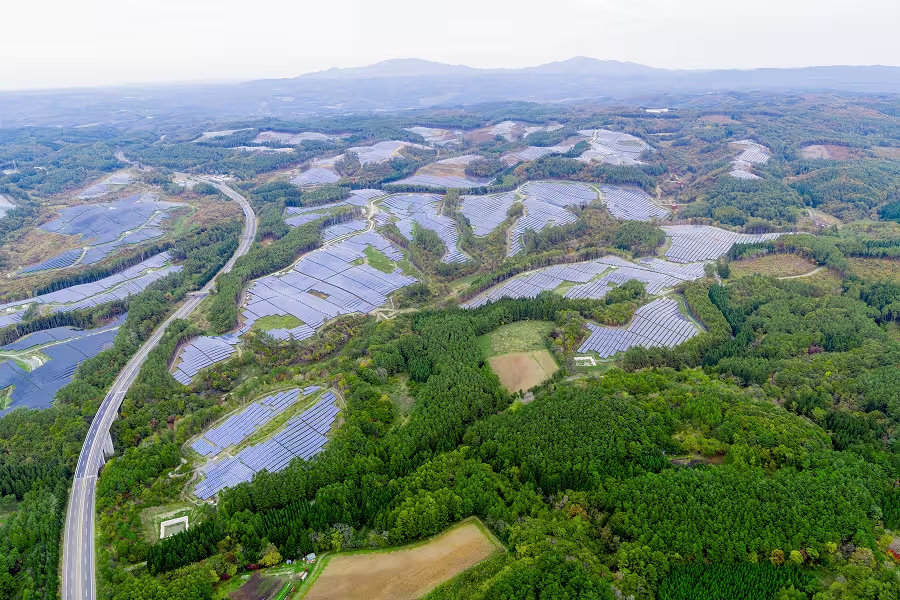
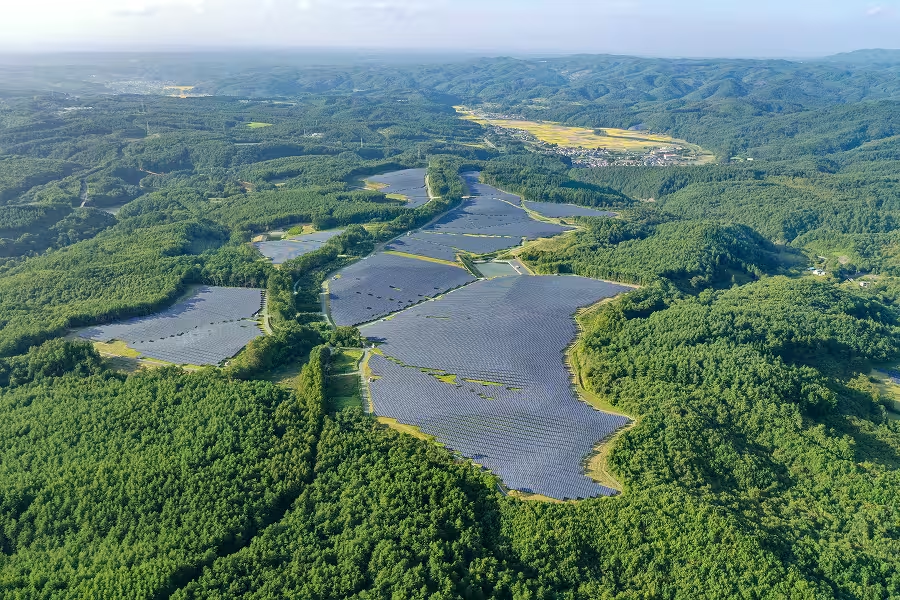
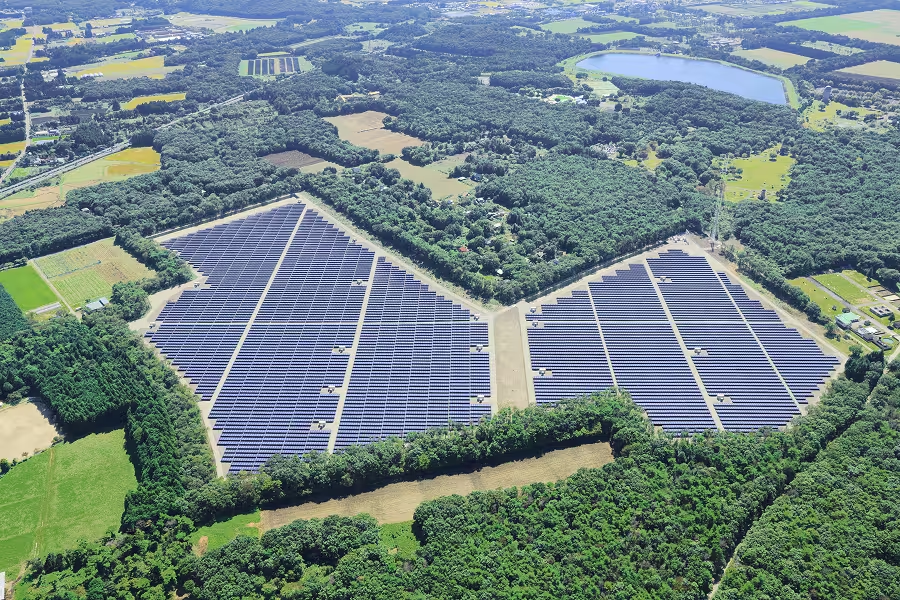
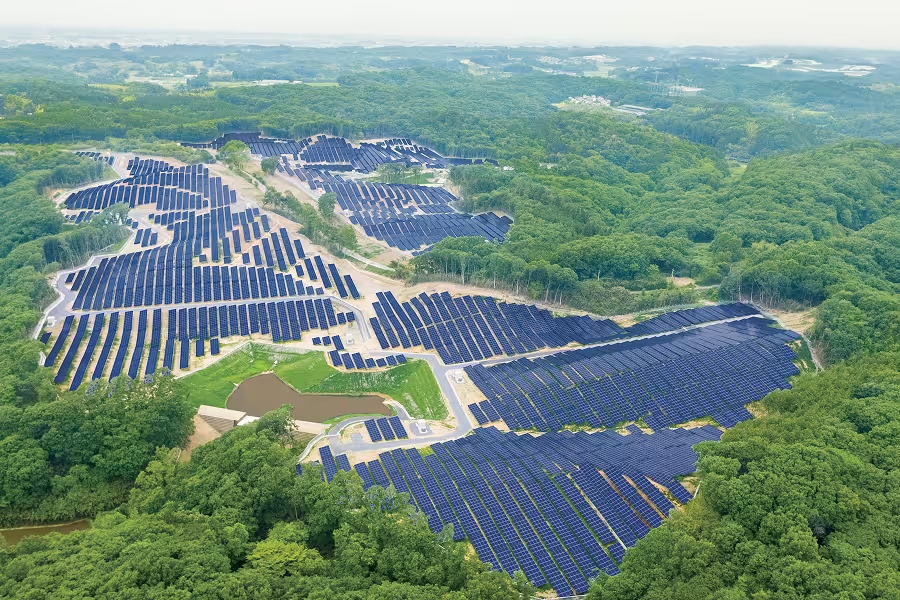
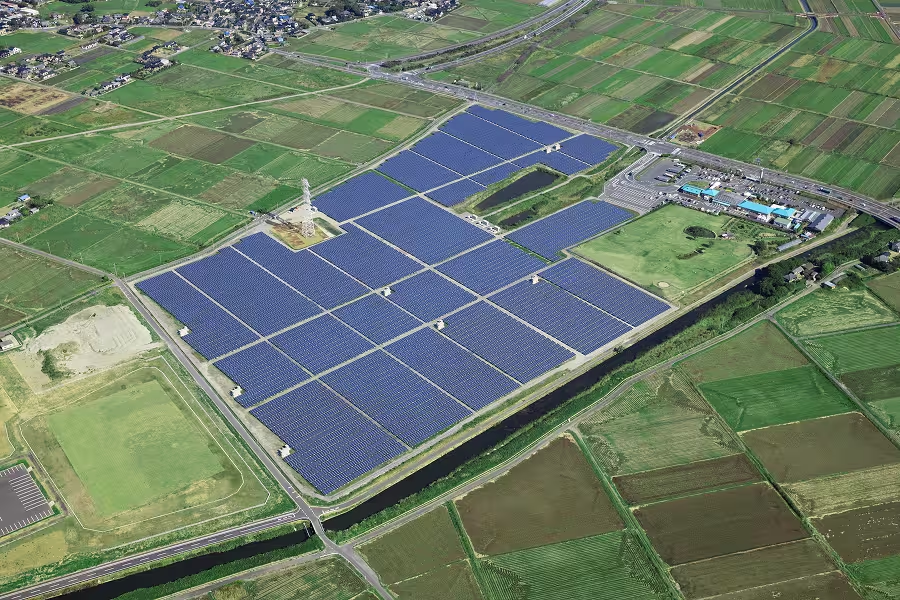
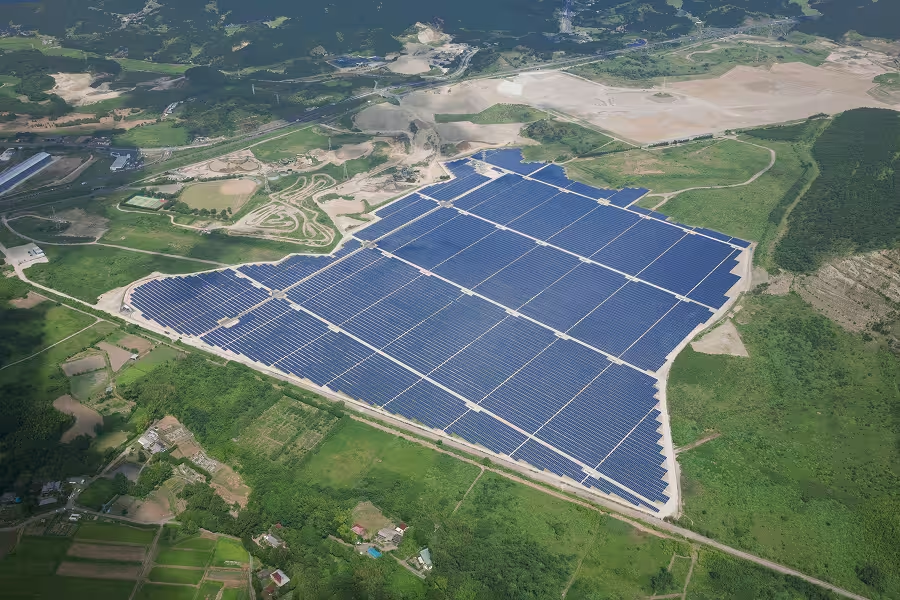
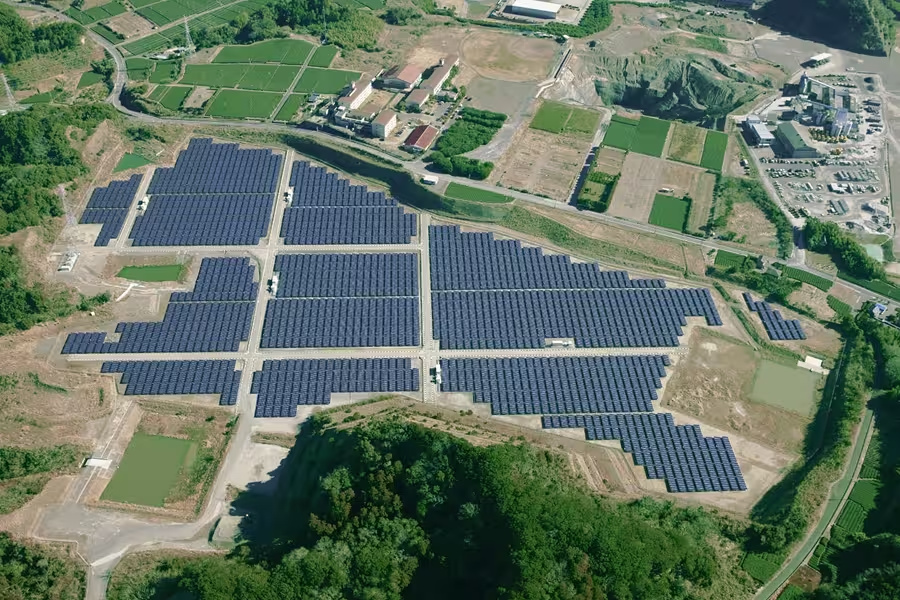
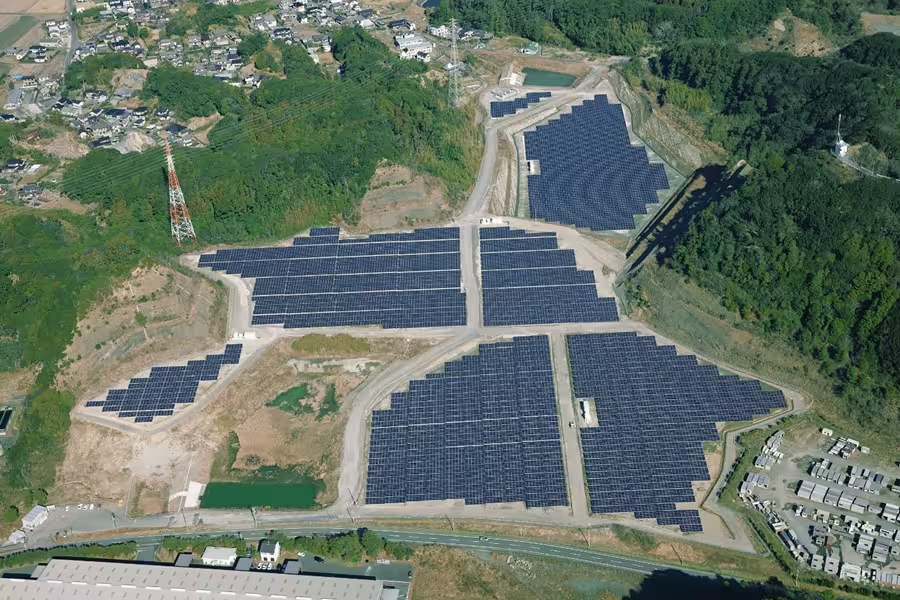
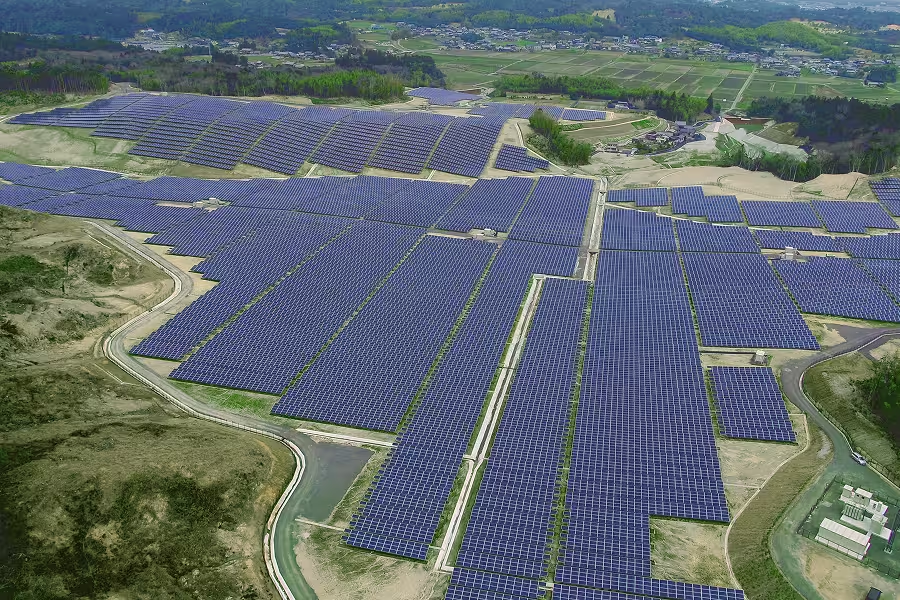
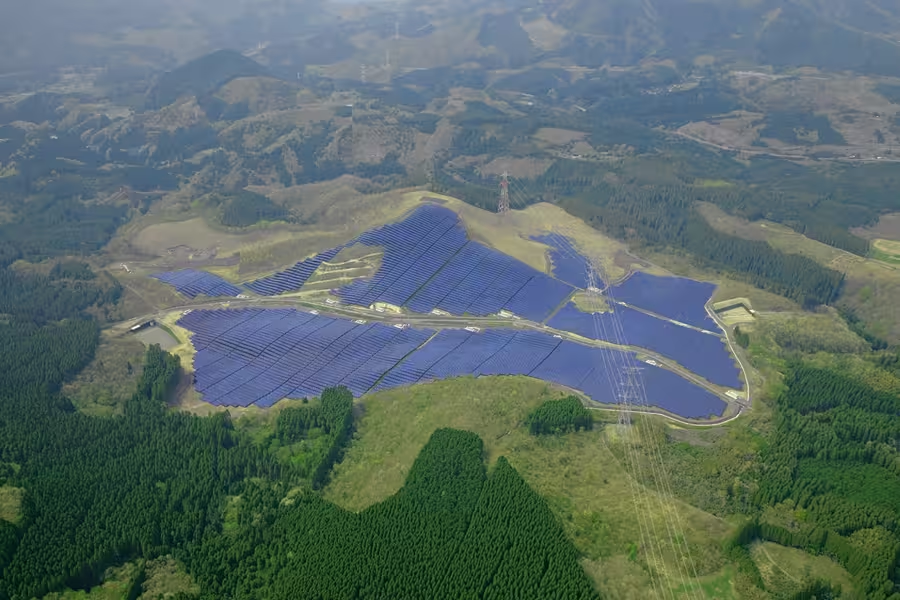
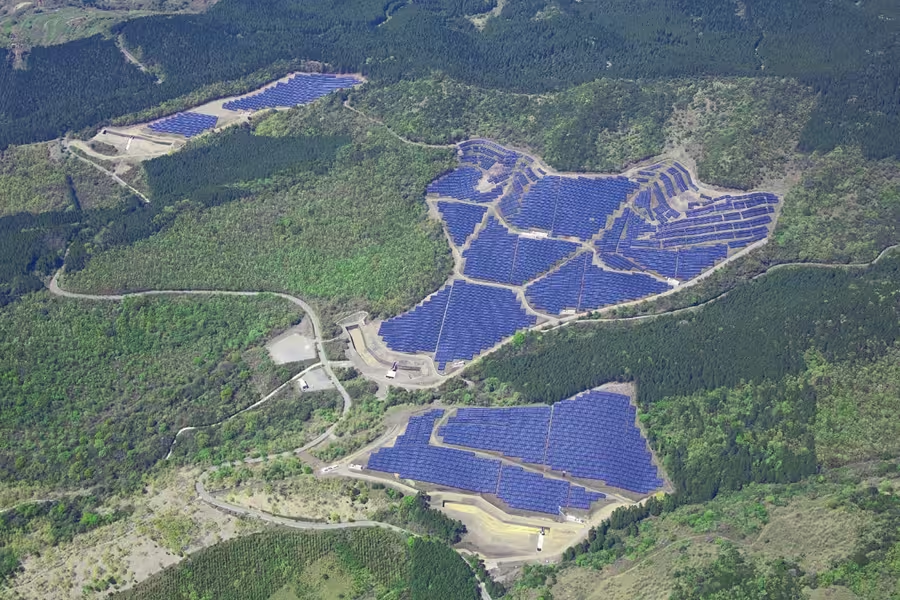
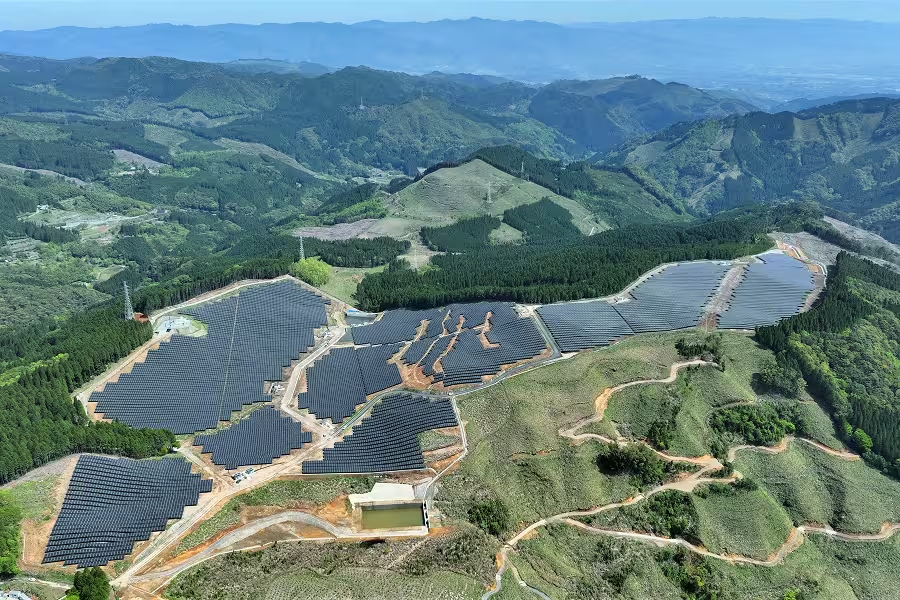
RENOVA has been developing its solar PV power generation business since the dawn of renewable energy in Japan. Following its full-scale entry into the renewable energy business in 2012, RENOVA started operating its first large-scale solar PV power plant, Suigo-Itako Solar, in 2014. In pursuit of scale expansion, the company subsequently launched Futtsu Solar, Kokonoe Solar, Nasushiobara Solar, and Ozu Solar. In July 2019, Karumai West Solar commenced operation, followed in December of the same year by Karumai East Solar. Currently, RENOVA owns a total of 13 large-scale solar power plants nationwide. The company comprehensively oversees all processes from development to construction and post-operation maintenance, working to operate power plants that are resilient to disasters, safe, and stable, based on a development policy that prioritizes “coexistence with local communities.”
Large-Scale Solar PV
Development Track Record
-
2014IbarakiSuigo-Itako Solar15.3MW
-
ChibaFuttsu Solar40.4MW
-
2015ShizuokaKikugawa-Ishiyama Solar9.4MW
-
ShizuokaKikugawa-Horinouchiya Solar7.5MW
-
OitaKokonoe Solar25.4MW
-
TochigiNasushiobara Solar26.2MW
-
2016KumamotoOzu Solar19MW
-
2019MieYokkaichi Solar21.6MW
-
TochigiNasukarasuyama Solar19.2MW
-
IwateKarumai West Solar48MW
-
IwateKarumai East Solar80.8MW
-
2021IwateKarumai Sonbou Solar40.8MW
-
2023KumamotoHitoyoshi Solar20.8MW
Expanding into Non-FIT Solar PV Power Plants
RENOVA is now leveraging the extensive knowledge and technology it has gained from its large-scale solar PV power business to expand into Non-FIT projects, which do not utilize the Feed-in Tariff system. The company is developing small-scale, distributed solar PV power plants across the country by utilizing abandoned farmland. The goal is to build a massive power supply network by aggregating approximately 9,000 small-scale solar PV power plants by fiscal year 2030.


Why Small-Scale, Decentralized Solar PV?
We view solar energy as a vital power source and are committed to promoting development that respects both local communities and the environment. There are clear reasons behind our strategic focus on "small-scale, decentralized solar PV projects" as part of this initiative.
Renewable Energy as a Primary Power Source in the Seventh Strategic Energy Plan
In February 2025, the Seventh Strategic Energy Plan was formulated, outlining the domestic power source mix for fiscal year 2040, which set a target of increasing the proportion of renewable energy from 40% to 50%. Solar PV power generation is positioned as a core power source within this plan, with an expansion planned to about 3.6 times the current installation level.

Economic Advantage and Immediate Impact: Meeting the Demand for Decarbonization
As corporate movements toward decarbonization accelerate, the demand for renewable energy is surging, and the Power Purchase Agreement (PPA) market continues to expand. Furthermore, technological advancements have led to a downward trend in power generation costs, giving renewable energy a distinct economic advantage over other power sources. Additionally, small-scale solar PV power features a short lead time from development to implementation, enabling it to contribute to rapid decarbonization—a pressing challenge for many companies.

Why Utilize Abandoned Farmland?
Japan has a limited land mass, and while suitable sites for large-scale development are decreasing, abandoned farmland—resulting from a shortage of farmers—has become a social issue. We believe that making effective use of these lands through methods that do not require large-scale land grading is the best way to contribute to national land conservation, improve energy self-sufficiency, and protect the local environment.
Why is Abandoned Farmland Increasing, and What Happens if Left Untouched?
Abandoned farmland refers to land previously used as rice paddies or fields that is currently left uncultivated due to the aging of farmers and a lack of successors.
When land is left unmanaged, it becomes overgrown with weeds, which can become a breeding ground for harmful wildlife and pests. It can also lead to illegal dumping, potentially deteriorating the safety and public order of nearby residential areas.
When land is left unmanaged, it becomes overgrown with weeds, which can become a breeding ground for harmful wildlife and pests. It can also lead to illegal dumping, potentially deteriorating the safety and public order of nearby residential areas.

Building Power Plants Trusted by Local Communities
We promise the local community “safety” and “peace of mind”
for 30 years even after the power plant is completed.
Small-scale solar PV power plants are often located in close proximity to local residents. This is precisely why we place “coexistence with the community” at the core of our business. We prioritize development and operations that ensure the power plant takes root safely for the long term and remains a trusted presence in the local community.
Why “30-Year Quality”?
In the Japanese solar PV power generation industry, “20 years” has been the standard benchmark. However, we define power plants as “infrastructure” that supports local society. Therefore, we implement rigorous quality control based on a premise of “long-term stable operation for 30 years or more,” exceeding industry standards. The safety of local residents is the foundation of our business. By constructing “high-quality power plants” that are resilient to disasters and that are in harmony with the environment—both during construction and throughout long-term operation—we transform local concerns into firm trust. We deliver energy born from these relationships to our consumers, striving to provide clean power with a reliable background that can be used with confidence well into the future.

Frequently Asked Questions (FAQ) Regarding Solar PV Power
- I am worried that a nearby power plant might cause landslides or environmental destruction.
-
- Site Selection Prioritizing Safety
- We verify land safety using hazard maps. As a rule, we do not undertake development in high-risk areas, such as Sediment Disaster Special Hazard Zones (Red Zones).
- Environmental Consideration
- We do not engage in development that involves large-scale deforestation or land grading that significantly impacts the natural environment or topography.
- I am worried that panels might fly off during typhoons or strong winds and cause damage to the neighborhood.
-
- Highly Durable Equipment and Integrated Long-term Management
- Under its “30-Year Quality” commitment, RENOVA ensures all power plants are designed based on structural calculations and constructed reliably by trusted partners. Furthermore, the completion of a power plant is not the finish line. We take responsibility for ongoing Operation and Maintenance (O&M) throughout the project period. Through regular inspections and maintenance, we maintain the quality established at completion over the long term. We stand by the local community to protect their safety for 30 years, ensuring that no damage, such as scattered panels, occurs even during extreme weather.
- I’m worried because I don’t know what kind of company they are or how they operate...
-
- Thorough Management and Attentive Dialogue
- Our business cannot exist without the understanding of the local community. We strive to be accepted not just as a business, but as a true member of the local society. In addition to utilizing local resources like abandoned farmland, we create opportunities for thoughtful communication with landowners and neighbors. Our commitment to addressing anxieties and concerns remains constant—both during development and throughout the power plant's long-term operation. Furthermore, we maintain close coordination with local governments to ensure all necessary permits and approvals are managed with transparency.

Fundamentals of Solar PV Power Generation
What is a Solar PV Power Plant?
A solar PV power plant is a facility that converts solar PV energy into clean electricity for a stable supply. Direct current (DC) power generated by solar panels is converted into alternating current (AC) by a power conditioner. The voltage is then optimized by a transformer and delivered to every corner of society via the power grid.

How Solar PV Power Works
Solar PV power uses solar cells to convert light energy directly into electrical energy. The heart of this system, the solar cell, consists of two layers of semiconductors with different properties: N-type and P-type. When sunlight hits the solar cell, particles with positive (+) and negative (-) electrical charges inside begin to move actively and separate naturally. This movement creates a flow of electricity, or current. A solar panel is the large plate-like structure formed by connecting these small solar cells together.


Large-Scale Solar PV
-
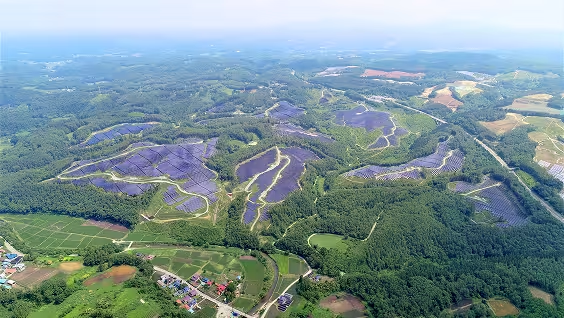 Karumai West SolarKarumai-machi, Kunohe-gun, Iwate Prefecture, Japan
- July 2019
- Capacity:
- 48.0MW
In Operation -
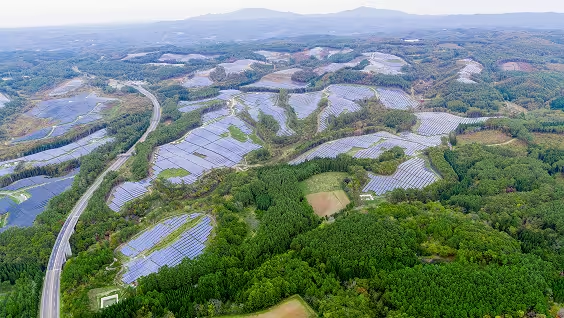 Karumai East SolarKarumai-machi, Kunohe-gun, Iwate Prefecture, Japan
- December 2019
- Capacity:
- 80.8MW
In Operation -
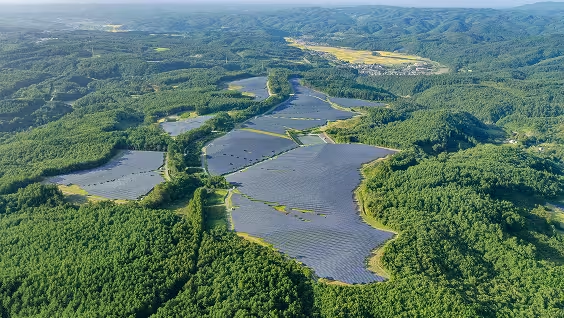 Karumai Sonbou SolarKarumai-machi, Kunohe-gun, Iwate Prefecture, Japan
- October 2021
- Capacity:
- 40.8MW
In Operation -
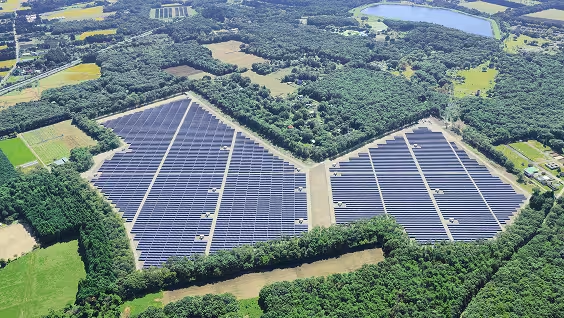 Nasushiobara SolarNasushiobara-shi, Tochigi Prefecture, Japan
- September 2015
- Capacity:
- 26.2MW
In Operation -
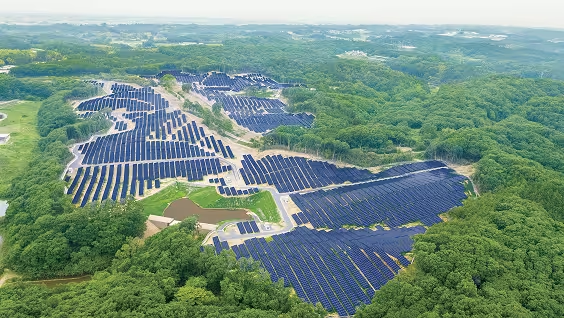 Nasukarasuyama SolarNasukarasuyama-shi, Tochigi Prefecture, Japan
- May 2019
- Capacity:
- 19.2MW
In Operation -
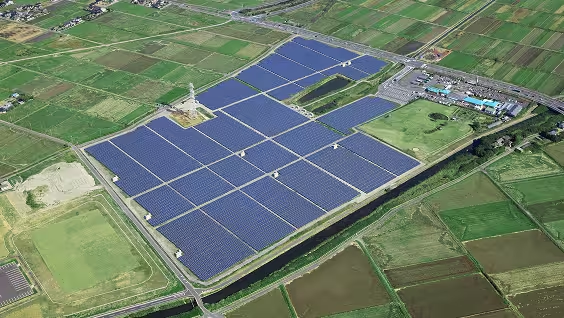 Suigo-Itako SolarItako-shi, Ibaraki Prefecture, Japan
- February 2014
- Capacity:
- 15.3MW
In Operation -
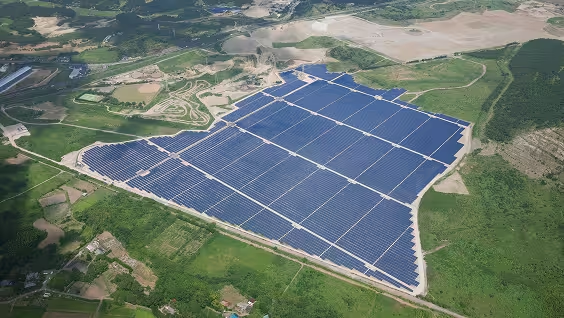 Futtsu SolarFuttsu-shi, Chiba Prefecture, Japan
- July 2014
- Capacity:
- 40.4MW
In Operation -
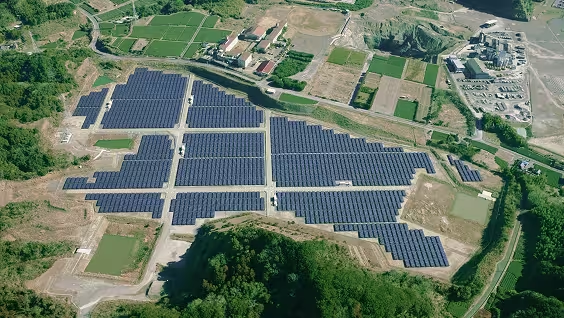 Kikugawa-Ishiyama SolarKikugawa-shi, Shizuoka Prefecture, Japan
- February 2015
- Capacity:
- 9.4MW
In Operation -
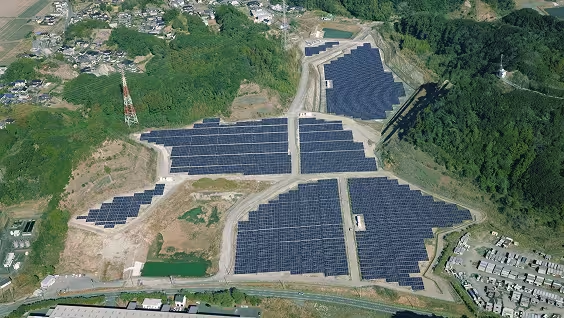 Kikugawa-Horinouchiya SolarKikugawa-shi, Shizuoka Prefecture, Japan
- February 2015
- Capacity:
- 7.5MW
In Operation -
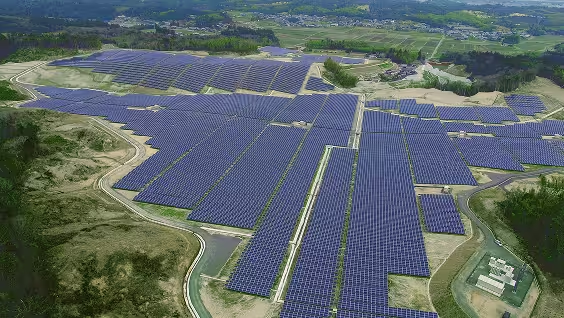 Yokkaichi SolarYokkaichi-shi, Mie Prefecture, Japan
- March 2019
- Capacity:
- 21.6MW
In Operation -
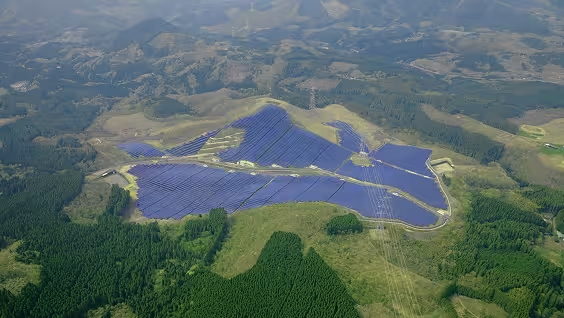 Kokonoe SolarKokonoe-machi, Kusu-gun, Oita Prefecture, Japan
- May 2015
- Capacity:
- 25.4MW
In Operation -
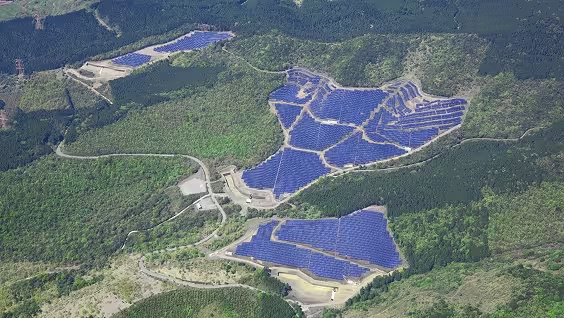 Ozu SolarOzu-machi, Kikuchi-gun, Kumamoto Prefecture, Japan
- April 2016
- Capacity:
- 19.0MW
In Operation -
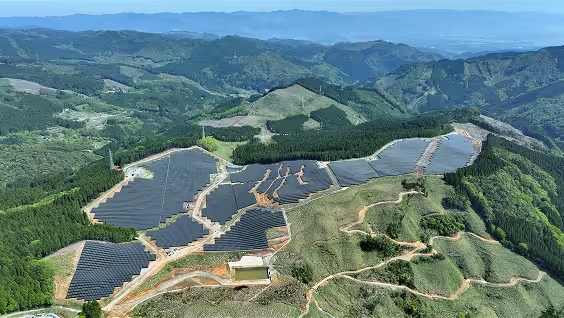 Hitoyoshi SolarHitoyoshi-shi, Kumamoto Prefecture, Japan
- June 2023
- Capacity:
- 20.8MW
In Operation